Reviewing the Cat Christmas Ball Confetti Shaker Design
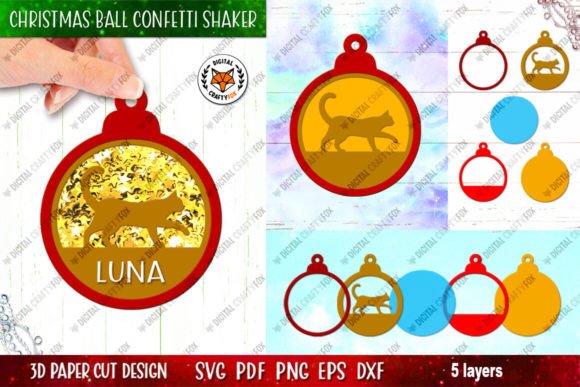
As a designer who has spent countless hours digitizing and testing files for client work, I have learned that not every festive graphic translates well to thread. When I first pulled up the Cat Christmas Ball Confetti Shaker, my initial reaction was one of cautious optimism. The concept is undeniably charming—a whimsical cat nestled inside a holiday ornament—but charm alone does not make a viable machine embroidery design. We need to look at how this 3D layered aesthetic functions when translated into stitches, especially for those of us running small shops or creating personalized gifts.
First Impressions and Visual Personality
The mood of this piece is playful yet sophisticated. It captures that specific cozy energy of the holiday season without resorting to cliché snowmen or generic trees. The layout suggests a circular frame, which is naturally pleasing to the eye and works well for centered placements on apparel. However, the description notes this is a 3D SVG intended for paper cutting and layered crafts using cardboard or foam. This raises an immediate question for us embroiderers: how do we adapt a design meant for physical layering into a flat textile medium?
In its digital form, the confetti elements suggest movement and depth. For an embroidery project, this means we must rely on stitch types to create that illusion. A skilled digitizer would likely use a combination of satin stitch for the bold outlines of the ball and the cat’s features, paired with fill stitch for the background areas to provide stability. The "confetti" aspect might be interpreted through scattered running stitches or small satin accents, depending on the scale. If you are considering this for a commercial embroidery run, understanding these structural choices is vital before you hoop your first garment.
Real-World Application: From Digital File to Finished Product
I recently tested a similar concept for a client launching a boutique line of holiday sweatshirts. The goal was to create a handmade product that felt premium but remained durable. Placing the Cat Christmas Ball Confetti Shaker on a mid-weight cotton blend fleece proved to be a strong choice. The thickness of the fabric supported the stitch density required to render the cat’s details clearly.
For Etsy sellers and craft business owners, versatility is key. This design could easily transition from a sweatshirt embroidery focal point to a smaller accent on a tote bag. Imagine a canvas tote bag design where the ball serves as a pocket outline, with the cat peeking out. Alternatively, it could work beautifully as an embroidered patch if applied to a stable backing, allowing customers to iron it onto jackets or hats later. The circular nature of the ball makes it particularly suitable for baby embroidery projects, such as bibs or onesies, where rounded shapes are safer and visually softer than sharp corners.
Navigating Technical Challenges
While the aesthetic is strong, there are practical hurdles. Because the original asset is described as a 3D layered design for paper, we must be wary of tiny details. In embroidery, very small elements can get lost or cause thread breaks if the stitch density is too high or the needle size is incorrect. If you are working with a small hoop size, such as a 4x4 inch frame, you may need to simplify the confetti elements to ensure they stitch out cleanly.
Fabric choice plays a massive role here. On stretchy fabrics like jersey knits, a robust stabilizer is non-negotiable. Without proper support, the tension from the fill stitches could pucker the fabric, distorting the perfect circle of the Christmas ball. Dark fabrics present another challenge; if the design relies on subtle color shifts to show the confetti, ensure your thread colors have enough contrast against the background. I always recommend testing the design in black and white mockups first to check for value contrast before committing to expensive threads.
Curved surfaces, such as caps, require careful placement. The center of the ball should align with the crown’s highest point to avoid distortion. If the design includes any text or tiny lettering within the confetti mix, verify that it remains legible at your intended size. Tiny details often merge together after washing, so what looks crisp on screen may blur in the finished product.
Enhancing Brand Value and Customer Trust
Using a distinctive design like the Cat Christmas Ball Confetti Shaker can significantly boost the perceived value of your items. Customers associate intricate, well-executed embroidery with quality. When they see a clean satin edge and balanced fill areas, it builds trust in your brand consistency. This is crucial for small shop products competing in a saturated market.
For those creating personalized gift items, this design offers a unique alternative to standard monograms. It feels thoughtful and curated. Whether used for holiday embroidery on kitchen towels or as part of a larger nursery decor piece, it adds a touch of whimsy that appeals to buyers looking for something special. The visual appeal of the cat theme taps into the enduring popularity of pet-centric merchandise, ensuring broader audience engagement.
Practical Designer Notes for Implementation
Before you launch this design into your production workflow, take these steps to ensure success:
- Test on Scrap Fabric: Always stitch out a sample on the exact fabric type you plan to use. Check for puckering or thread breaks.
- Verify Licensing: Since the source is a 3D SVG for paper crafts, confirm you have the right to convert and sell it as an embroidery file. Do not assume commercial rights unless explicitly stated.
- Check Stitch Density: If you are digitizing this yourself, ensure the confetti elements are not too dense, which can make the fabric stiff.
- Contrast Check: Use high-contrast thread colors for the cat against the ball background to maintain clarity.
- Stabilizer Selection: Use cut-away stabilizer for stretchy garments and tear-away for stable wovens to ensure longevity.
In conclusion, the Cat Christmas Ball Confetti Shaker holds significant potential for creative entrepreneurs. It bridges the gap between cute illustration and functional design. By paying attention to technical details like hoop size, stabilizer, and thread choice, you can transform this digital concept into a tangible, high-quality custom apparel item or home good. It is a reminder that even designs originating from different craft mediums can find a new life in embroidery, provided we approach them with a critical, experienced eye.