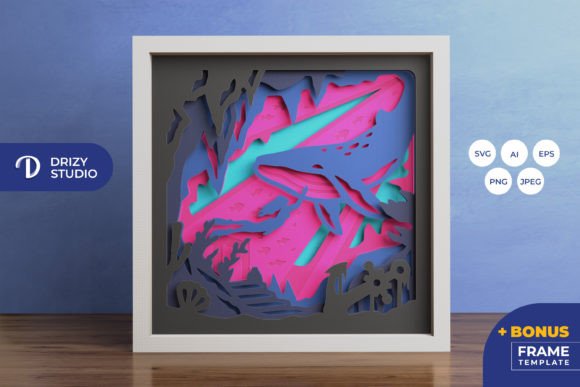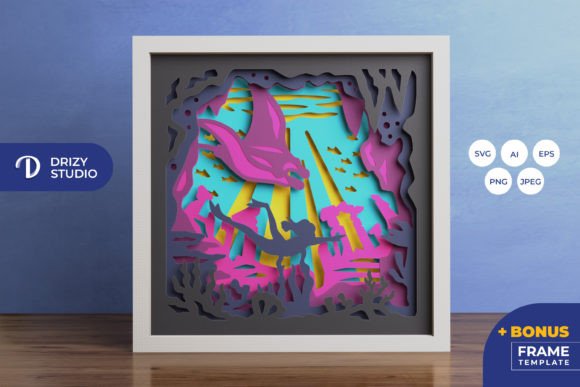
Reviewing the Girl with Big Stingray 3D Shadow Box
When I first pulled up the A Girl with Big Stingray 3D Shadow Box file on my design tablet, I was struck by the narrative potential. As an embroidery designer who has spent years digitizing for both hobbyists and commercial boutiques, I look past the initial visual appeal to ask a harder question: how will this actually stitch out? The concept of underwater life captured in a shadow box format is trendy, but executing it in thread requires careful consideration of density, layering, and fabric choice.
This isn’t just a cute graphic; it is a complex composition that blends character art with marine biology aesthetics. For those of us running small shops or selling on Etsy, understanding the practical application of this 3D SVG style design is crucial before we commit to production. Let’s break down how this piece performs in real-world scenarios.
First Impressions and Visual Mood
The immediate mood of the A Girl with Big Stingray 3D Shadow Box is whimsical yet serene. It captures a moment of connection between a human figure and nature, which resonates deeply with current trends in nursery decor and eco-conscious apparel. The "shadow box" aesthetic implies depth, suggesting that the design relies on layered elements to create a sense of three-dimensionality. In embroidery, this translates to a need for precise registration and thoughtful color blocking.
For a designer, the layout feels balanced. The stingray acts as a framing device, guiding the eye toward the central character. This makes it an excellent candidate for products where you want a focal point that holds attention, such as the center of a tote bag or the back of a sweatshirt. However, the intricate details mean this is not a quick-stitch project. It demands patience and precision.
Real-World Application: The Custom Sweatshirt Test
To evaluate this design properly, I imagined a specific client request: a custom birthday gift for a young marine biology enthusiast. The goal was a high-quality, wearable piece of art rather than a disposable trend item. I chose a heavyweight cotton blend sweatshirt as the base garment. Why? Because the stitch density required to render the girl’s features and the stingray’s texture needs a stable foundation.
On a thin t-shirt, this design might cause puckering or distortion, especially if the fill stitches are dense. On a sweatshirt, however, the fabric provides enough body to support the weight of the thread. The result would be a luxurious, textured finish that feels substantial to the touch. This is key for handmade product sellers who need to justify higher price points through perceived quality.
If you are an Etsy seller or run a craft business, consider offering this as a premium add-on. It works beautifully as a sweatshirt embroidery piece because the larger surface area allows the details to breathe. Customers often overlook how hoop size impacts detail clarity; ensuring you have a large enough hoop to capture the full scope of the shadow box effect is vital.
Navigating Technical Challenges
While the artistic merit is high, there are technical hurdles. The term "3D" in the title suggests depth, but in machine embroidery, we achieve this through thread layering and stitch types, not actual physical height like a foam shadow box. You must carefully review the embroidery file structure. Look for areas where satin stitch borders meet fill stitch backgrounds. If the transition is too abrupt, you may see gaps or overlaps after washing.
I recommend testing this design on scrap fabric first. Specifically, test it on both light and dark backgrounds. The underwater theme likely involves blues, teals, and perhaps skin tones. On dark navy fabric, you might need to adjust your thread colors or add an underlay to ensure vibrancy. On white fabric, ensure that the lighter threads don’t get lost against the background.
Another critical factor is the stabilizer. For a design with this much detail, a cut-away stabilizer is non-negotiable for knit fabrics like sweatshirts or baby clothes. A tear-away might leave residual stiffness or fail to support the design long-term. If you are creating a personalized gift or a baby embroidery item, comfort is paramount, so ensure the back of the stitching is clean and soft.
Best Use Cases for Small Business Owners
Beyond apparel, where else does the A Girl with Big Stingray 3D Shadow Box shine? Here are a few practical applications for your design assets:
- Tote Bag Design: Canvas totes provide a sturdy, flat surface that handles dense stitching well. This design could become a signature item for beach shops or aquarium gift stores.
- Embroidered Patch: If the design includes a border, consider digitizing it as a standalone patch. Patches allow customers to apply the art to jackets or bags without committing to permanent embroidery on the garment itself.
- Nursery Decor: Framed embroidery hoops are trending. Stitching this onto linen or cotton canvas and framing it creates a high-end holiday embroidery or birth announcement gift.
- Custom Apparel: Think beyond shirts. Aprons for cooking classes or library volunteers could feature this whimsical design, adding personality to uniform-like items.
However, use caution with curved surfaces like caps. The complexity of the girl’s face and the stingray’s wings may distort on the front panel of a baseball cap unless you have extensive experience with cap digitizing and hooping. For beginners, stick to flat surfaces.
Commercial Viability and Brand Consistency
For commercial embroidery projects, consistency is king. Before listing this as a small shop product, verify the licensing terms. Does the file allow for unlimited physical sales? Are there restrictions on digital redistribution? Always confirm these details to protect your business.
From a branding perspective, this design signals creativity and attention to detail. It helps build trust with buyers who are looking for unique, non-mass-produced items. When you present a finished product with clean trimming, proper stabilizer removal, and vibrant thread choices, you elevate the perceived value of your entire store.
Use printable mockup tools to visualize how the design looks on different products before you stitch a single thread. This saves time and materials. Compare how the applique design elements (if present) interact with different fabric textures. A fuzzy fleece will swallow fine details, while a smooth poplin will showcase them sharply.
Final Designer Notes
The A Girl with Big Stingray 3D Shadow Box is a compelling addition to any designer’s library, provided you respect its technical demands. It is not a plug-and-play file for every situation. It thrives on stable, medium-to-heavy weight fabrics with ample hoop space. It struggles on stretchy, thin, or highly textured materials without significant adaptation.
Before you begin your next embroidery project, check the stitch count and density settings in your software. Adjust the pull compensation if necessary. Test your thread colors against your fabric swatches. And always, always stitch a test run. The difference between a good product and a great one lies in these small, preparatory steps. By treating this design with the professional scrutiny it deserves, you can create stunning, memorable pieces that resonate with your customers and stand the test of time.