Reviewing the Surfer Layered SVG 4 Layer Design
As a designer who spends half my life staring at stitch maps and the other half managing client expectations, I approach every new machine embroidery design with a healthy dose of skepticism. We have all been there: you download a file that looks stunning on the screen, only to find it turns into a bird’s nest of thread breaks and puckering once it hits the fabric. That is why I took a close, practical look at the Surfer Layered SVG 4 Layer Surfboard Svg from Rishasart. This isn’t just about aesthetics; it is about whether this asset holds up in the real world of craft business and handmade production.
First Impressions and Visual Mood
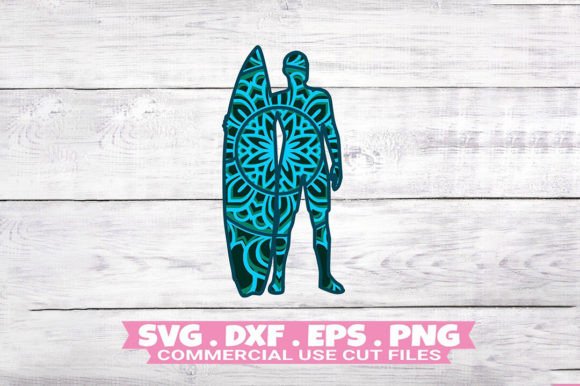
The first thing that strikes you about this design is its layered complexity. In the world of Graphics and digital assets, "layered" often implies depth, and here it suggests a modern, dimensional approach to a classic beach theme. The combination of a surfboard silhouette with mandala-style detailing creates a unique visual personality. It feels relaxed yet intricate, bridging the gap between casual beach vibes and bohemian artistry. For an embroidery project, this duality is powerful. It allows you to target customers who want something more sophisticated than a basic palm tree but still rooted in coastal nostalgia.
The mood is distinctly oceanic but refined. When I visualize this stitched out, I do not see a cheap souvenir. I see a boutique item. The interplay of the surfboard shape with the organic curves of the mandala elements suggests a design that relies on contrast. For this to work, your choice of thread colors will be critical. You cannot simply pick one shade of blue and hope for the best. This design demands thoughtful color blocking to ensure the layers remain distinct after the needle stops moving.
Real-World Application: The Tote Bag Test
To evaluate the Surfer Layered SVG 4 Layer Surfboard Svg properly, I imagined a specific real-life scenario: creating a premium canvas tote bag for a local beachside boutique. Canvas is a sturdy fabric, but it has a noticeable texture. A design with fine details can get lost if the stitch density is too low or if the stitches are too small for the weave of the material.
In this context, the four-layer structure of the design is an advantage. It allows for strategic use of different stitch types. Ideally, the background layers might utilize a fill stitch to create solid blocks of color that anchor the design, while the foreground mandala details could benefit from a lighter touch, perhaps using satin stitch borders or even running stitch accents to maintain clarity without adding excessive bulk. If you are selling this as a handmade product, the perceived value comes from how clean the edges look. A messy, dense center will ruin the illusion of depth.
Beyond tote bags, this design has strong potential for sweatshirt embroidery. On fleece or French terry, you must be cautious about density. Too many stitches in a small area will cause the fabric to pucker and the garment to feel stiff. However, if scaled correctly for a larger hoop, the bold shapes of the surfboard can stand out beautifully against the soft texture of the fabric, making it a hit for custom apparel lines targeting surfers or yoga enthusiasts.
Navigating Technical Challenges
While the aesthetic appeal is high, there are areas where this design requires careful handling. The term "3D Mandala" in the description hints at intricate detailing. In embroidery, intricate does not always mean better. Tiny corners and sharp points in mandala patterns are notorious for causing thread breaks if the machine speed is too high or if the needle is dull. When using this embroidery file, you must inspect the smallest details. Are the gaps between layers wide enough to prevent thread merging? If the layers are too close, they will blur together, losing the intended 3D effect.
Another consideration is the hoop size. Since this is a layered design, it likely requires a medium to large hoop to accommodate the full width of the surfboard and the extending mandala elements. Trying to shrink this design to fit a small keychain or a baby’s hat might result in loss of detail. For baby embroidery, simplicity is usually safer. I would recommend reserving this specific design for items with more surface area, such as pillow covers, aprons, or adult-sized tote bag design projects.
Fabric choice also plays a pivotal role. On dark fabrics, the contrast between layers must be stark. If you are stitching a light blue mandala on a navy sweatshirt, ensure the underlying layers are dark enough to provide a shadow effect, or use a white underlay to make the colors pop. Always test on scrap fabric first. Do not skip this step. Check how the stabilizer interacts with the fabric. For stretchy materials like jersey knits, a cut-away stabilizer is non-negotiable to prevent distortion during washing.
Commercial Viability and Brand Consistency
For Etsy sellers and small shop owners, consistency is key to building trust. The Surfer Layered SVG 4 Layer Surfboard Svg offers a versatile asset that can be adapted across various products. Imagine offering a matching set: a tote bag, a tea towel, and a patch. Using the same core design creates a cohesive brand identity. Customers appreciate when they can recognize your style across different finished product categories.
However, before listing these items, you must verify the licensing terms. The product description mentions it is an instant download from Rishasart, but it does not explicitly detail commercial rights in the snippet provided. As a professional, I always advise checking the license agreement thoroughly. Can you sell physical items made with this design? Can you use it in digital mockups? Clarifying this protects your craft business from legal issues down the line. Never assume; always confirm.
Practical Designer Notes for Success
- Test Stitch First: Always run a test stitch on the actual fabric you plan to use. Check for thread breaks and tension issues.
- Color Contrast: Use high-contrast thread colors to emphasize the four layers. Monochromatic schemes can look muddy if the values are too similar.
- Check Density: Review the stitch count and density settings in your software. Reduce density if stitching on delicate or stretchy fabrics.
- Hoop Selection: Ensure your hoop is large enough to capture the full design without cropping essential mandala details.
- Stabilizer Choice: Match the stabilizer to the fabric weight. Heavy canvas needs different support than lightweight cotton.
- Mockup Verification: Create black and white mockups to check if the design reads clearly without color. If it looks like a blob in grayscale, it needs adjustment.
In conclusion, the Surfer Layered SVG 4 Layer Surfboard Svg is a promising addition to your library of design assets. It bridges the gap between trendy beach aesthetics and intricate artistic detail. With proper technical preparation and attention to fabric compatibility, it can elevate your commercial embroidery offerings. It is not a plug-and-play solution for every item, but for the right project, it delivers the professional polish that customers expect from high-quality handmade goods. Treat it with the respect a complex design deserves, and it will serve your business well.